
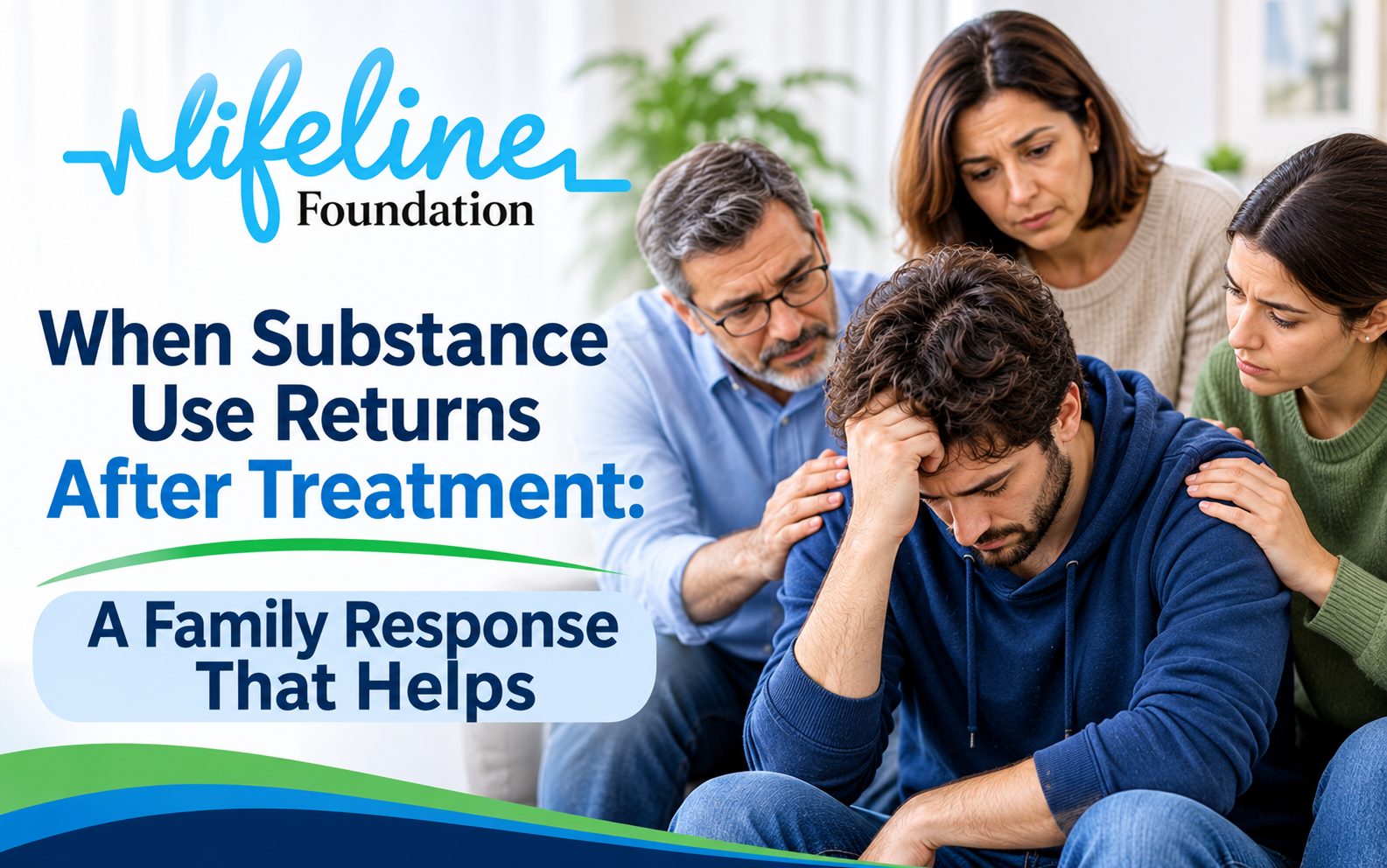
The call may come late at night. A brother has been drinking again. A daughter has found drug-related messages. A spouse who had been attending appointments has missed two sessions and is no longer answering the phone. For relatives, a return to substance use can feel like being taken back to the most frightening day of the previous year.
It does not mean the earlier work was worthless. It does mean the situation needs a fresh assessment, beginning with safety. What happens next matters more than winning an argument about who warned whom.
Separate an emergency from a setback
If a person is unconscious, breathing very slowly, having a seizure or unable to be roused, seek emergency medical care immediately. Suspected opioid overdose is especially dangerous because opioids can suppress breathing. The WHO recommends access to naloxone and appropriate training for people likely to witness an opioid overdose, alongside prompt emergency response. Never assume that someone who is unresponsive simply needs to sleep.
Returning to opioid use after a period of abstinence can increase overdose risk because tolerance may be reduced. Mixing opioids with alcohol or sedative medicines increases danger further. These facts should inform the family’s emergency plan, not become another reason to shame the person.
If there is no immediate emergency, arrange a clinical review. Identify what substance was used, when, whether medicines were missed and whether there are signs of withdrawal, severe depression or suicidal thinking. Do not invent a diagnosis from a single incident, but do not dismiss repeated use as harmless either.
Avoid the punishment spiral
A common response is to collect every phone, cancel work plans and announce the relapse to extended family. Anger is understandable, especially where money has been lost or trust has been broken. Yet public humiliation can make honest disclosure less likely at precisely the moment when accurate information is essential.
Try a more specific conversation: “We are worried about your safety. What happened before you used, and would you speak to your treatment professional with us?” Listen for practical difficulties. Was the person unable to attend appointments? Did a conflict or bereavement occur? Has sleep deteriorated? Were cravings discussed in treatment but not addressed afterward?
There may be several contributing factors. A return to use is not proof that someone has no wish to recover. It is also not proof that the family must accept theft, violence or dangerous behaviour. Both truths can stand together.
Reassess the care plan rather than restarting it blindly
Some people benefit from more frequent counselling; some require a medical review, another treatment setting or medication assessment for a particular disorder. Others need assistance with housing, work or psychiatric care. The level of support should respond to the person’s current risk and circumstances.
Comparing rehabs in pune can be reasonable when the existing programme no longer meets the patient’s needs, but changing buildings alone will not address every difficulty. Ask whether the new provider can explain why its approach would differ and how it would coordinate earlier records, consent and continuing care.
The US Substance Abuse and Mental Health Services Administration describes relapse as possible in the course of a substance use disorder and notes that care may need adjustment. That is not a reason to treat resumed substance use lightly. It is a reason to respond with assessment rather than declaring the entire person a failure.
Boundaries are different from threats
A boundary describes what the family will do to stay safe: “We will not give money without understanding its purpose,” or “You cannot drive the children when impaired.” A threat uses humiliation or fear to force compliance. The distinction affects trust and the safety of other household members.
If money has gone missing, protect essential accounts, document transactions and obtain appropriate financial or legal advice. If there is violence, prioritise the safety of children and affected adults and seek suitable help. Family support should not require anyone to endure abuse.
Keep one or two people responsible for coordinating appointments and communication. Too many relatives giving contradictory orders can make every conversation feel like a confrontation. Ask the patient whom they trust to join a clinical discussion, provided that involvement is safe.
Find out what happened after discharge
People sometimes leave a structured setting and return to a household with no plan beyond “do not use again”. Consider the daily conditions: isolation after work, unsupervised access to medicines, unresolved pain, difficult relationships, money pressures or sleep problems. Recovery planning should address life outside the clinic, not only the time spent inside it.
Make a written response plan with the treating professional. It can identify early warning signs, whom the patient can call before using, how relatives should respond, when urgent assessment is needed and what follow-up has been scheduled. The plan should be realistic enough to use on a working day, not merely impressive on paper.
For Pune families seeking a fresh consultation, a nasha mukti kendra listing may help establish the route to an appointment. Confirm that the facility provides the relevant clinical service before travel. A convenient pin and positive-looking photographs cannot replace an explanation of treatment quality, staff expertise and emergency procedures.
Speak about the incident without turning it into an identity
A useful discussion asks what can be learned: Was the person afraid to disclose cravings? Was the follow-up plan too difficult to attend? Did treatment fail to recognise another condition? Was there enough support after a change in medication? These questions invite more useful information than “How could you do this to us again?”
A family may also need its own support to deal with exhaustion and mistrust. Counselling can help relatives agree on boundaries and avoid placing every household problem on one person’s recovery. Children should not be asked to monitor or report on an adult’s substance use.
Most importantly, review the immediate risk again tomorrow. One conversation is not enough if breathing problems, severe withdrawal, suicidal thinking or repeated dangerous use appear. Safety requires action, not slogans.
Treatment is not a moral scoreboard. The practical measure is whether the person can be brought back into appropriate care, with better information about what was missing, while everyone affected remains safe.
These suggestions do not replace addiction-specialist or emergency care. Seek urgent help for suspected overdose, breathing problems, seizures or immediate self-harm risk. Medicines and withdrawal require qualified clinical guidance.