
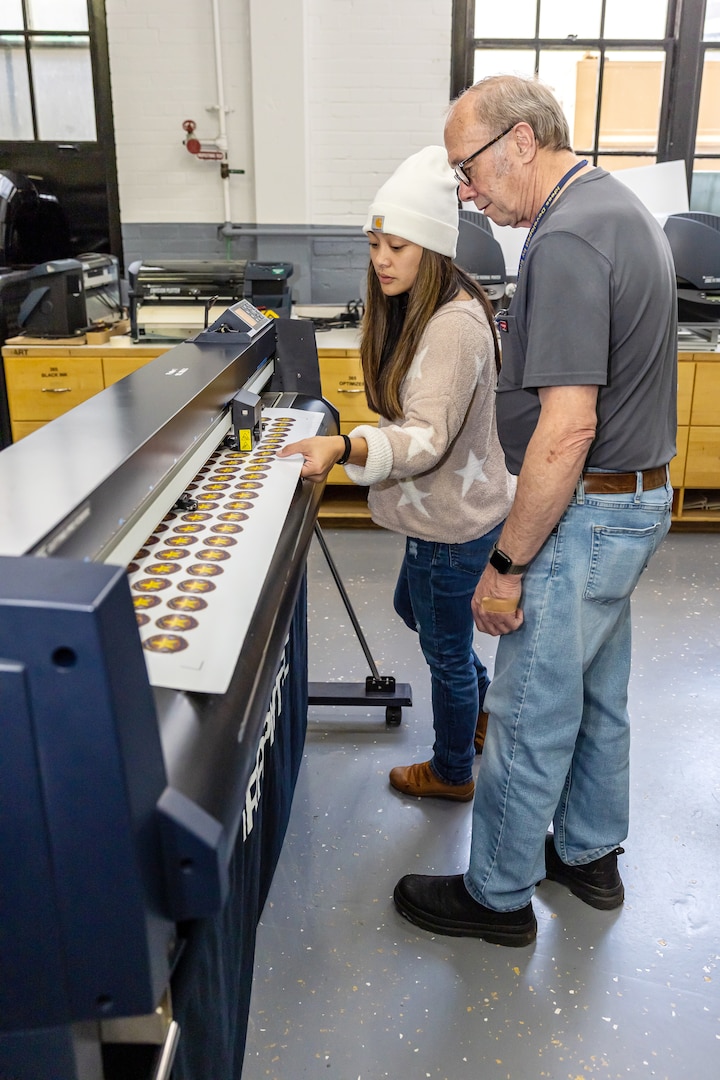
Professional printed materials remain a tangible and powerful component of business communication. From client-facing documents to in-store signage and branded packaging, print continues to play a meaningful role across industries. The challenge for businesses has always been managing the production process efficiently without compromising on quality or consistency. Online Printing Services have addressed this challenge directly, offering a model that combines professional output with the speed and accessibility of digital commerce.
What Problems Do Online Printing Services Solve for Businesses?
Traditional print procurement carries several well-known inefficiencies. Coordinating with local vendors often involves multiple rounds of communication before production even begins. Proofing processes can be slow, and geographic limitations mean that options are often restricted to what is available nearby. Cost transparency can also be inconsistent, making it difficult for businesses to plan print budgets with accuracy.
Online printing platforms address each of these pain points. The ordering process is standardized and self-guided, reducing the need for extended vendor communication. Digital proofing tools provide instant visual feedback. A much broader range of product options becomes accessible regardless of location. And pricing structures are clear and consistent, enabling more accurate budget planning from the outset.
How Do Businesses Use Online Printing for Marketing Materials?
Marketing collateral represents one of the most common and volume-heavy print categories for businesses. Flyers, brochures, postcards, and promotional inserts all require consistent quality and often need to be produced in meaningful quantities on reliable schedules. Online printing platforms are well suited to this type of work, offering standardized sizes and formats that align with common marketing use cases.
Design template libraries available on many platforms make it straightforward for teams without dedicated graphic designers to produce materials that look polished and professional. Pre-formatted templates account for bleed, margin, and resolution requirements, reducing the likelihood of production errors that can delay orders or result in quality issues.
Can Online Printing Support Event and Trade Show Preparation?
Event preparation places significant pressure on print timelines, often requiring large-format materials such as banners, retractable displays, posters, and signage alongside smaller collateral like handouts and business cards. Managing all of this through multiple vendors introduces scheduling complexity and increases the risk of inconsistencies in brand presentation.
Consolidating event print production through a single online platform simplifies the logistics considerably. Materials can be ordered simultaneously, with matching brand colors and finishes applied consistently across all product types. Expedited production options on most platforms also provide a safety net when event timelines tighten unexpectedly.
What Makes Online Printing Particularly Valuable for Reordering?
Reordering is one area where online platforms deliver especially clear efficiency gains. Businesses that regularly replenish the same materials — such as business cards, product labels, or seasonal promotional inserts — benefit significantly from the saved order functionality most platforms offer.
Rather than recreating specifications from memory or searching through email archives for previous vendor communications, teams can access their full order history, replicate a previous job in a few clicks, and confirm the order within minutes. This removes a considerable amount of administrative time from what is essentially a routine operational task.
How Do Online Printing Platforms Support Brand Consistency Across Teams?
Maintaining brand consistency becomes increasingly complex as businesses grow and more team members become involved in producing printed materials. Without a centralized system, individual departments may inadvertently use outdated logos, incorrect color profiles, or off-brand fonts — each of which chips away at the coherent visual identity a brand works to establish.
Online printing platforms with team account functionality help prevent this by centralizing approved design assets, templates, and product specifications in a shared environment. When everyone orders from the same platform using the same approved files, the output is far more consistent — regardless of who placed the order or from which location.
Is Online Printing Cost-Effective Compared to Traditional Options?
Cost-effectiveness in printing is rarely about the lowest unit price alone. It also involves the time invested in the procurement process, the reliability of the output, and the total cost of errors or reprints. When evaluated across all of these dimensions, online printing platforms frequently offer strong overall value.
Large production facilities operate with economies of scale that allow competitive pricing, particularly for mid-to-high volume orders. Clear, upfront pricing structures also make it easier to compare options and select the specification that fits both quality requirements and budget parameters. And by reducing the time spent on vendor coordination, businesses also recover indirect cost savings in staff hours.
What File Preparation Steps Help Ensure a Smooth Online Print Order?
File preparation is one area where attention to detail pays off. Most online printing platforms publish clear file specification guidelines that outline requirements for resolution, color mode, bleed, and safe zones. Reviewing and following these guidelines before uploading files significantly reduces the likelihood of production issues.
Working in the correct color profile — typically CMYK for print rather than RGB, which is designed for screen display — is one of the most common and impactful preparation steps. Embedding fonts and flattening transparency layers are also standard recommendations. Many platforms offer automated file checks that flag common issues at the point of upload, providing an additional layer of protection before orders go into production.
How Has Technology Improved the Online Printing Experience Over Time?
Online printing platforms have evolved considerably from their early iterations. Initial platforms offered limited product ranges and basic ordering interfaces. Today, leading platforms provide sophisticated design tools, augmented reality previews, advanced color matching, and real-time production tracking — all accessible through intuitive web interfaces or dedicated mobile applications.
Artificial intelligence and machine learning are also beginning to appear in print production workflows, with applications in automated quality checking, layout optimization, and personalized product recommendations. These technological improvements continue to close the gap between the capabilities of online platforms and the specialized expertise of traditional print specialists.
Rethinking How Your Business Approaches Print Production
The business case for online printing rests on a straightforward proposition: a process that traditionally required significant time, coordination, and geographic proximity can now be handled more efficiently through a well-designed digital platform — without sacrificing quality or flexibility.
For businesses still relying on traditional print vendors out of habit rather than necessity, the opportunity to streamline operations, improve brand consistency, and reduce the administrative burden of print procurement is well within reach. The first step is simply exploring what current online printing platforms can offer — and for most businesses, that exploration quickly reveals a model that is both practical and genuinely advantageous.